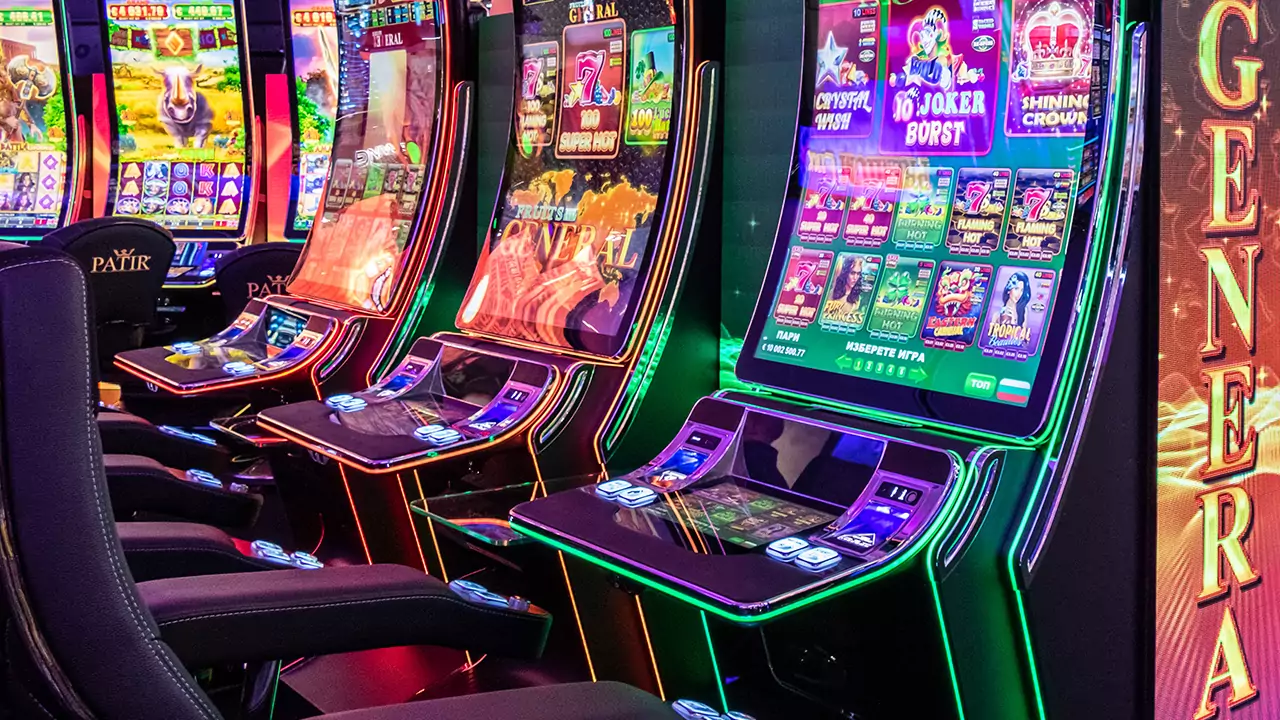
Slots: The In-Depth Guide to How They Work, Strategies, and Modern Game Mechanics

Slot machines are the most played and profitable casino games worldwide. Whether in Las Vegas, Atlantic City, or an online gaming platform, slots dominate the casino floor due to their simplicity, entertainment value, and potential for massive payouts. Behind the flashing lights and captivating sounds, however, lies a deeply mathematical system designed with precision.
This comprehensive guide explores the evolution, mechanics, probability, and strategy of slot machines while uncovering the psychology and technology that drive their design. If you’re serious about understanding slots at a professional or analytical level, this article gives you the foundation you need.
The Historical Evolution of Slot Machines
The story of slots begins in the late 19th century. In 1895, Charles Fey invented the Liberty Bell, the first mechanical slot machine featuring three reels and five symbols: hearts, spades, diamonds, horseshoes, and a cracked Liberty Bell. When players landed three bells in a row, they won the top prize.
Over time, casinos recognized the game’s profitability, and innovation followed:
- 1960s: Electromechanical slots replaced purely mechanical components, enabling larger jackpots.
- 1980s: Video slots emerged, using digital screens instead of physical reels.
- 2000s: The digital revolution gave rise to online slots, expanding accessibility and variety.
- Today: Artificial intelligence, virtual reality, and data-driven personalization are redefining player experiences.
This progression has turned the slot machine from a mechanical curiosity into a high-tech entertainment system designed to engage players both psychologically and mathematically.
The Core Mechanics of Slot Games
To understand modern slot gaming, you must first grasp the mechanics that determine every spin’s outcome. Despite different visuals or themes, every slot machine operates on a few key principles.
Random Number Generators (RNG)
At the core of every slot machine is a Random Number Generator (RNG), a complex algorithm that produces random outcomes. The RNG runs continuously, generating thousands of number sequences every second. When you press “Spin,” the RNG stops on a specific sequence, determining where the reels land.
Key insights about RNGs:
- Each spin is completely independent of the previous one.
- The RNG ensures fairness; outcomes cannot be predicted or manipulated.
- Myths such as “hot” or “cold” machines are psychological illusions, not mathematical truths.
Reels, Symbols, and Paylines
Every slot game features a grid of reels (usually 3, 5, or 6) containing different symbols. When reels stop spinning, combinations of symbols across paylines determine wins.
Common symbol types include:
- Standard Symbols: Represent the theme (e.g., fruits, numbers, or characters).
- Wild Symbols: Substitute for other symbols to form winning combinations.
- Scatter Symbols: Trigger free spins or bonus rounds.
- Multipliers: Increase the value of winning combinations by a set factor.
Modern games have replaced fixed paylines with ways-to-win systems, offering thousands of potential combinations.
The Mathematics of Slot Payouts
Slots may look like games of luck, but they are built on calculated probability. Every aspect of the game—from paytables to hit frequency—is mathematically modeled to determine how much it returns to players.
Return to Player (RTP)
Return to Player (RTP) is the percentage of all wagered money that a slot machine pays back over time. For example, a slot with a 96% RTP will theoretically return $96 for every $100 wagered across millions of spins.
Important RTP facts:
- RTP is a long-term average, not a short-term guarantee.
- Online slots often feature higher RTPs (95–98%) compared to land-based versions.
- High RTP games offer slightly better chances but do not eliminate variance.
Volatility (Variance)
Volatility defines the risk and reward profile of a slot.
- Low volatility: Frequent but small payouts, ideal for steady play.
- Medium volatility: Balanced between risk and reward.
- High volatility: Infrequent but large payouts, appealing to thrill-seekers.
Understanding volatility helps players choose games aligned with their risk tolerance and bankroll management strategy.
House Edge
Every casino game includes a house edge, representing the statistical advantage held by the operator. In slots, the house edge is simply 100% minus the RTP. So, a 96% RTP slot carries a 4% house edge.
This edge ensures that while short-term wins are possible, long-term play statistically favors the casino.
Game Design and Player Psychology
Slots are engineered with precision psychology to maximize engagement. Every sound, animation, and bonus round serves a purpose rooted in behavioral science.
The Reward Schedule
Slot machines use variable ratio reinforcement, one of the most powerful motivators in behavioral psychology. This means rewards come at unpredictable intervals, keeping players spinning in anticipation of the next win.
Visual and Audio Stimulation
- Sound Effects: Winning sounds trigger dopamine release, even during small payouts.
- Color Schemes: Bright and saturated visuals increase player attention and time spent playing.
- Animations: Flashing lights and reel spins simulate action and anticipation.
The combination of random outcomes and sensory feedback creates a feedback loop that sustains player engagement.
The Near-Miss Effect
Slot developers often include near-miss results—outcomes that are close to a win, such as two jackpot symbols and a third just above the payline. Psychologically, near misses encourage continued play by stimulating the same brain regions activated by actual wins.
Online Slots: The Digital Transformation
Online platforms have revolutionized how people play slots. The digital format has allowed developers to introduce new features and personalization tools that physical machines could never achieve.
Benefits of Online Slots
- Accessibility: Available 24/7 on any device.
- Game Variety: Thousands of unique titles with different mechanics.
- Bonus Features: Free spins, loyalty rewards, and interactive mini-games.
- Transparency: Online slot RTP and volatility information are often publicly listed.
Modern online slots also use adaptive algorithms to tailor content to user behavior, recommending games similar to those previously played.
Live and Hybrid Slots
The integration of live streaming technology has introduced live dealer slots, combining real-time interaction with digital play. Players watch a human host spin physical reels, blending traditional casino realism with online convenience.
Advanced Features and Mechanics in Modern Slots
Today’s slot games are more than simple reel spinners—they incorporate complex systems designed to heighten excitement and winning potential.
Progressive Jackpots
A progressive jackpot increases every time a player wagers. A small percentage of each bet contributes to the prize pool, which can reach millions. Progressive systems can be:
- Standalone: Linked to a single machine.
- Local: Shared across machines in a single casino.
- Networked: Shared across multiple casinos or platforms.
Cascading Reels and Cluster Pays
Instead of traditional paylines, these mechanics replace winning symbols with new ones, allowing multiple consecutive wins on a single spin. This innovation has become a core feature in many modern titles.
Bonus Rounds and Gamified Play
Slots now incorporate interactive bonus rounds where players make decisions, such as selecting hidden prizes or advancing through levels. These mechanics merge gaming and gambling, creating a more immersive experience.
Skill-Based Slots
A newer development in slot design is skill-based gaming, where player actions influence bonus outcomes. Although RNG still determines core results, added skill components increase engagement and a sense of control.
Strategies for Playing Slots Effectively
While slots are chance-based, strategic decisions can optimize enjoyment and longevity.
1. Choose High-RTP Games
Select slots with RTP values above 96%. Over time, these provide better returns and smaller losses.
2. Manage Your Bankroll
Set a fixed budget and divide it into smaller sessions. Never chase losses or increase bets impulsively.
3. Understand Game Mechanics
Study paytables and volatility levels before playing. Knowing how a slot functions helps you make informed decisions.
4. Utilize Bonuses
Leverage free spins, welcome offers, and loyalty rewards to maximize playtime without additional cost.
5. Set Time Limits
Slot play should be structured and time-controlled to prevent fatigue and emotional decision-making.
The Future of Slot Gaming
Technology continues to push the boundaries of slot development. Artificial intelligence and blockchain are already shaping the next generation of gaming.
- AI Personalization: Real-time adaptation of games to player preferences.
- Virtual Reality Slots: Immersive environments that simulate physical casino floors.
- Blockchain Fairness: Transparent payout tracking and decentralized randomness verification.
- Social Gaming: Slots integrated with competitive leaderboards and community features.
The line between video games and gambling is blurring, creating new opportunities for innovation and player engagement.
Frequently Asked Questions (FAQ)
Q1: Can slots be predicted or influenced?
No. Modern slots use certified RNG software, making outcomes entirely random and impossible to predict.
Q2: What’s the difference between RTP and hit frequency?
RTP reflects long-term payout percentage, while hit frequency measures how often a slot produces any win, regardless of size.
Q3: Are online slots fairer than land-based slots?
Generally, yes. Online slots typically offer higher RTP percentages and undergo frequent independent audits for fairness.
Q4: Is there an ideal time to play slots?
No. RNGs operate continuously and are unaffected by time of day or player volume. Every spin remains independent.
Q5: Why do some slots feel “luckier” than others?
This perception often results from variance and short-term randomness. Players remember big wins more vividly than long losing streaks, reinforcing the illusion of luck.